

The Wardrobe Worth Keeping: How Sudsies Gives Beautiful Clothes a Longer, Better Life
Beautiful clothes are rarely memorable simply because they were expensive. What lasts is something more intimate. It is the way a jacket continues to sit correctly across the shoulders after years of use. It is the silk dress that still moves with ease. It is the dinner shirt that has survived long evenings, warm rooms, travel, conversation, and celebration without losing its poise. In a serious wardrobe, value is not determined only at the register. It is measured again and again in the years that follow.
That has always seemed to me one of the quiet truths of luxury. The best garments are not created for a single bright moment and then a graceful disappearance. They are meant to remain. They gather memory. They become associated with places, seasons, hotels, dinners, flights, houses, and phases of life. Eventually they stop feeling like purchases and begin to feel like parts of biography.
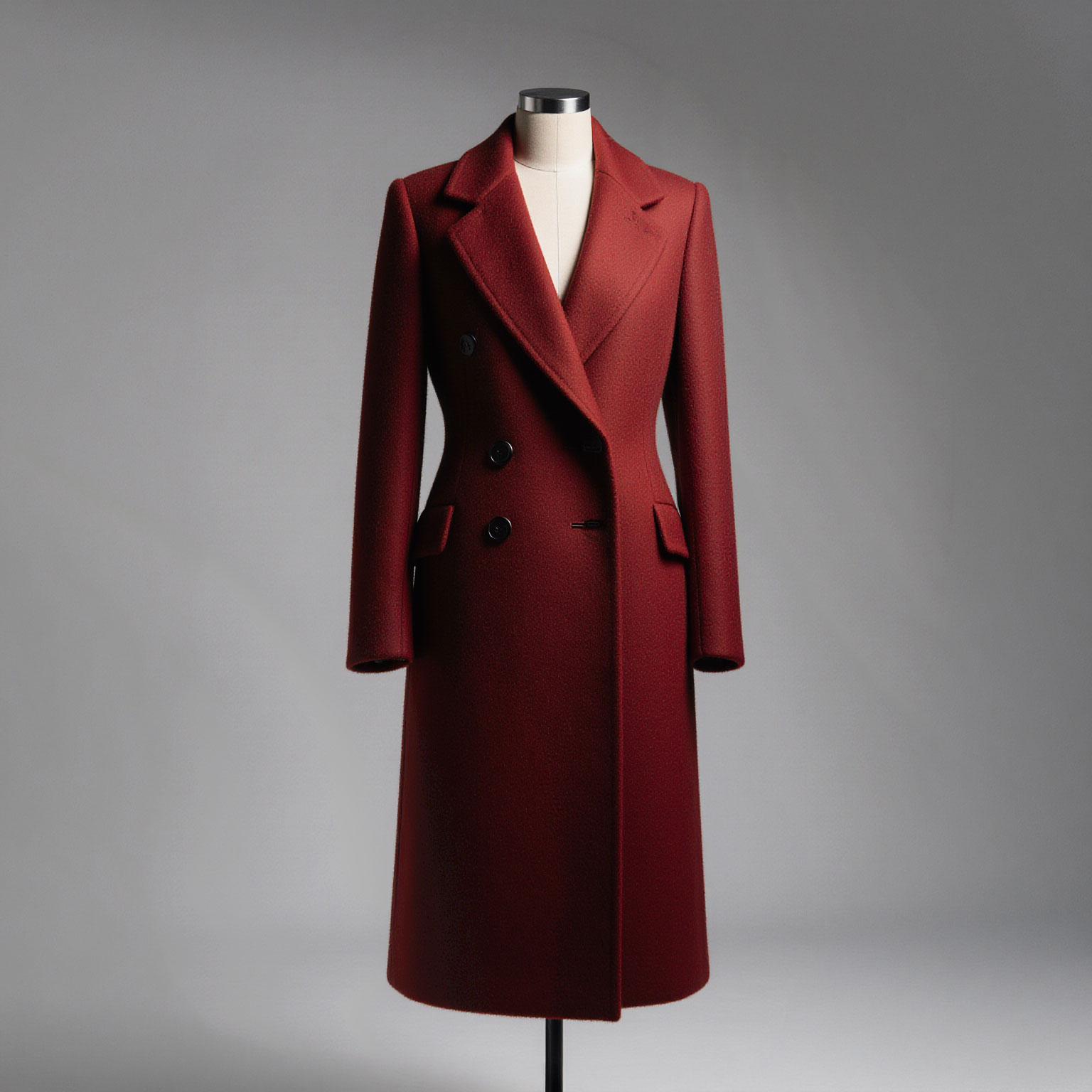
A beautifully cut coat, a black dress that always lands correctly, a cashmere knit that grows softer rather than tired, an ivory blouse that still flatters after innumerable wearings, these pieces endure because they continue to justify their place. They are not merely fashion. They are continuity.
Yet continuity in clothing does not happen by accident. Garments do not drift into longevity. They are brought there by stewardship.
That word matters. Stewardship suggests something more deliberate than maintenance. It implies judgment, restraint, memory, and care. It implies that the item in question is worth preserving not only because it cost something, but because it means something. This is where Sudsies enters the life of a wardrobe. Sudsies does not approach garment care as a quick cosmetic reset. Sudsies approaches it as the ongoing protection of shape, softness, drape, finish, and identity over time.
That distinction is especially important now, when the language of sustainability has become both fashionable and strangely abstract. We hear a great deal about circularity, responsible consumption, resale, and environmental consciousness. All of that has its place. But in the private life of a luxury wardrobe, the most immediate form of sustainability is still the simplest one: keep the garment beautiful, wearable, and itself for as long as possible.
The best houses have always understood this. Hermès speaks openly about maintenance, repair, and objects designed to be used, repaired, and passed down through generations. Brunello Cucinelli continues to frame its knitwear in terms of noble fibers, craftsmanship, and refined workmanship rather than disposability or novelty. That is not a coincidence. Brands built on real materials and artisanal standards assume a longer horizon. Their best pieces are not designed for one season of relevance. They are designed for sustained use.
To own such garments well, then, is not only to style them beautifully. It is to care for them intelligently. And intelligent garment care begins with a very basic principle that too much of the category once ignored: not every garment should be treated alike.
This sounds obvious until one remembers how much conventional dry cleaning culture was built on flattening distinction. Too often, clothing was treated as though construction, fiber, lining, softness, hand-feel, embellishment, finish sensitivity, and shape retention were secondary concerns. But those things are not secondary. They are the garment.
Sudsies begins there. Construction matters. Fiber matters. Lining matters. The difference between a softly tailored jacket and a heavily structured coat matters. The difference between silk and synthetic matters. The difference between a hand-finished evening piece and a basic occasion dress matters. The point is not merely to clean something. The point is to read it correctly before deciding what care it can withstand.
That philosophy becomes even more important in South Florida, where wardrobes do not live quiet, museum-like lives. They circulate. They move. They go from cool interiors to punishing humidity, from polished lunches to evening events, from club rooms to terraces, from Bal Harbour to Palm Beach to late dinners in the Design District. White clothing here asks more of its owner. Linen asks for judgment. Silk asks for tact. Knitwear must survive strong air-conditioning and sea air. Eveningwear has to contend with warmth, fragrance, body chemistry, valet seating, and the strange wear that only a real social life produces.
One sees this especially in places like the Miami Design District, which describes itself as a creative neighborhood centered on innovative fashion, design, art, architecture, and dining, and in Bal Harbour Shops, where more than one hundred luxury boutiques sit inside a retail environment built around global houses such as Chanel, Dior, Gucci, Prada, and Kiton. These are not abstract style ecosystems. They are living reminders that South Florida’s best wardrobes are active wardrobes. They are bought to be worn.
Anyone who has watched that world up close knows the rhythm. A woman stops into Bal Harbour for a late lunch at Makoto or Carpaccio, leaves with a new blouse or knit, and by evening the same garment is already in motion, translated into an entirely different social setting. A man buys a sport coat for one dinner and finds, if the choice was sound, that it quietly becomes the answer to twenty more. South Florida teaches this lesson quickly. Good clothes are not static trophies. They are working assets of personal presentation.
That is one reason Sudsies’ Ecofriendliest approach matters so much here. Sudsies does not rely on PERC and the harsher legacy solvents that once shaped the public imagination of dry cleaning. That matters in the immediate sense because garments return fresher and without the chemical odor many people still associate with traditional dry cleaning. More importantly, it matters because the repeated care decisions imposed on a garment over time either preserve or diminish it. A piece can appear clean while having been quietly stripped of softness, suppleness, texture, and life. Repetition is where the damage accumulates. Repetition is also where intelligent care proves itself.
Sudsies answers that problem with a different ethic. The garment is assessed according to what it actually needs, then handled with as much restraint as possible. Steam-powered spot cleaning, professional wet cleaning where appropriate, fabric-specific handling, moisture control, and thoughtful finishing all reflect the same underlying belief: preservation is the goal. The garment should come back ready, elegant, and still recognizably itself.
There is something deeply civilized in that. It pushes against the modern habit of assuming that newness is the highest form of desirability. Anyone who has really lived with beautiful clothes knows otherwise. The best wardrobes are rarely the newest. They are the most coherent. They reveal years of selection rather than weeks of acquisition. They contain garments that have survived because they deserved to survive.
And survival in clothing is not just aesthetic. It is narrative.
A navy blazer carries more than wool and construction. It carries a board appointment, a flight to New York, a dinner in Palm Beach, a season of confidence. A black dress may belong forever to one gala, one family milestone, one weekend by the water, one chapter of a marriage, one particular year when its wearer felt entirely like herself. A cream trouser may bring back winters in Palm Beach with an immediacy no photograph can quite match. Clothing is unusually good at holding memory in usable form.
This is why replacement is never a perfect answer, even when money is not the issue. Another garment may be similar. It is not the same. The emotional life of clothing is part of its value. Sudsies understands that, which is one reason Sudsies resonates so strongly among households whose wardrobes are significant, heavily used, and closely woven into travel, entertaining, work, and social routine. In such homes, garment care is not a peripheral errand. It is part of the infrastructure of life well run.
Pickup and delivery matter, of course. Convenience always matters. But convenience is only the outer layer. The real value lies beneath it. Sudsies makes continuity possible. Clothing leaves the wardrobe, receives informed care, and returns ready to reenter life without distortion, harshness, or drama.
That same philosophy applies well beyond couture. Couture makes the point obvious because its fragility and specificity are visible. But the principle is just as relevant to the architecture of daily dressing. Fine cotton shirts should remain crisp without becoming brittle. Wool should keep its suppleness. Cashmere should preserve its softness. Silk should continue to move with fluidity. Touch matters as much as sight, perhaps more. Luxury is often discussed visually, but it survives physically.
This is why Ecofriendliest, in the Sudsies sense, should not be heard as a narrow environmental slogan. It is a broader ethic of care. It suggests that the most responsible way to clean a garment is often also the most aesthetically intelligent. It links gentleness with exactitude. It links preservation with pleasure. It assumes that a garment exists in relation both to the environment around it and the body within it.
South Florida, with its waterways, heat, salt air, and visible natural vulnerability, lends additional force to that idea. Here, environmental intelligence does not feel theoretical for very long. Private refinement and broader responsibility increasingly belong together. The well-kept household is no longer expected to choose between them. Sudsies reflects that newer alignment by providing garment care that is gentler on clothing and more consistent with the way sophisticated households now want to live.
Still, people do not build loyalty to a garment care provider because of theory alone. They build it through repeated proof. They remember when garments come back soft rather than stripped. They remember when a beloved piece looks refreshed but not overhandled. They remember when white feels crisp, silk feels alive, wool feels right, and cashmere feels like cashmere. They remember when the wardrobe remains easy to trust.
That is where Sudsies earns its place in the life of beautiful clothes.
A better life for beautiful clothes is, in the end, a life with fewer ruptures. Fewer moments when the very process meant to care for a garment leaves it feeling slightly less like itself. Fewer unnecessary replacements caused not by boredom or changing taste, but by poor stewardship. In their place comes something much more elegant: continuity, readiness, assurance, and the quiet satisfaction of knowing that what deserved to last has been given the chance to do so.
That may be the most persuasive argument for Sudsies’ Ecofriendliest garment care. It does not ask the guest to choose between beauty and responsibility, or between luxury and intelligence. It suggests that the highest level of garment care now requires all of them at once.
Beautiful clothes ask very little from us beyond discernment. The first form of discernment is knowing what to buy. The second, and perhaps the more lasting one, is knowing how to keep it.
Sudsies has built its place in South Florida by understanding that the story of a garment does not end when it enters the closet. In many ways, that is where its real life begins.