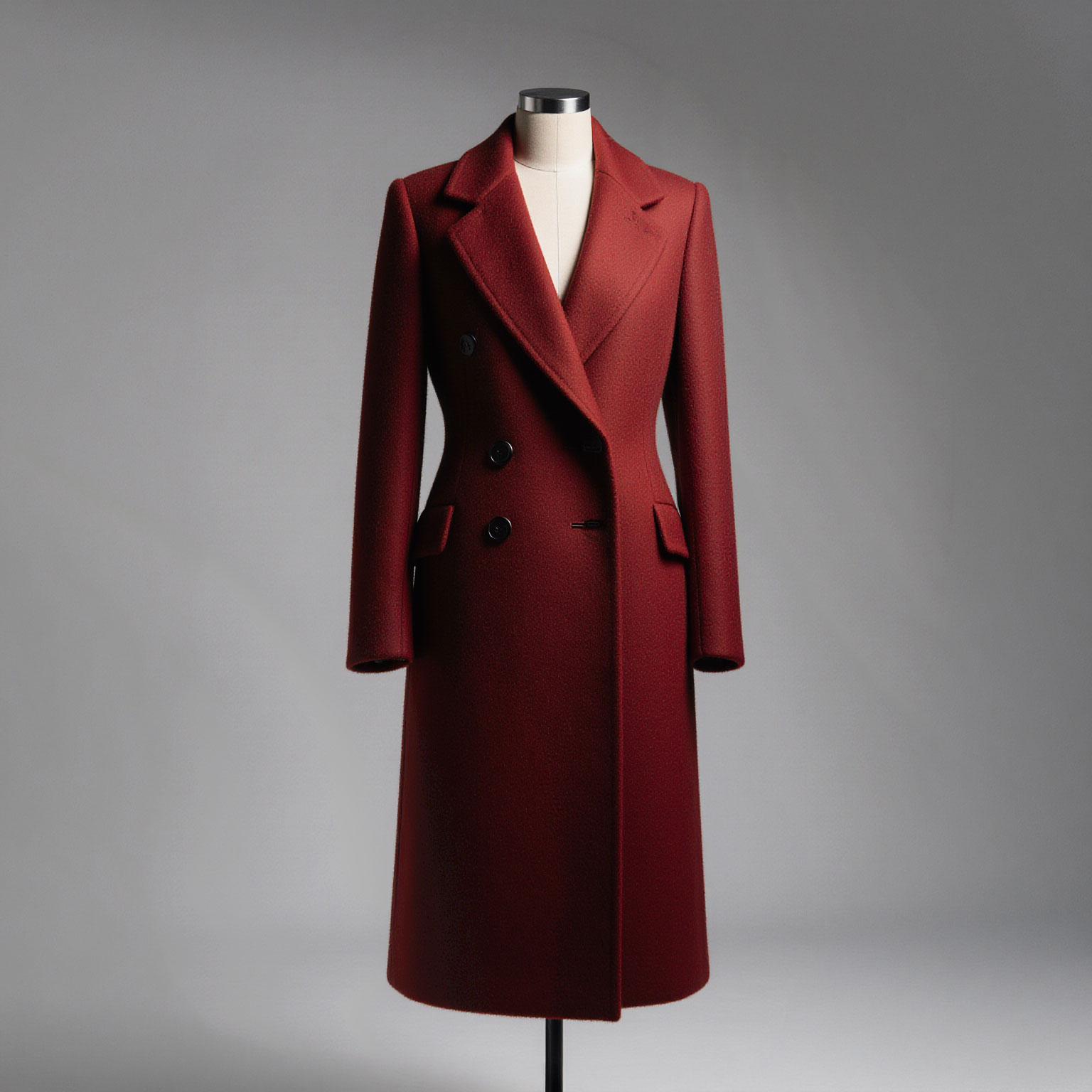


Keeping Beautiful Things Beautiful
Why Sudsies has become part of the wardrobe infrastructure for South Florida guests who expect the Ecofriendliest standard of care.
There are cities where a wardrobe can remain largely theoretical, admired in the closet, called upon occasionally, and spared the weather, movement, and social density that test whether beautiful clothes are truly being lived in. South Florida is not one of them. Here, clothing enters a far more active life. A cream Brunello Cucinelli jacket may move from a Palm Beach lunch to cocktails along the water. A midnight-blue Kiton dinner jacket may be worn to Florida Grand Opera’s 2026 Gala, then months later reappear at a collector dinner during Art Basel Miami Beach, which is scheduled for December 4 to 6, 2026. A silk Valentino dress may travel from Bal Harbour to a waterfront evening at PAMM, whose Thursday programming remains one of Miami’s recurring social rituals. The Palm Beach International Boat Show returns March 25 to 29, 2026, along Flagler Drive, a reminder that in South Florida, social life and waterfront life are often the same thing.
This is one reason the idea of “keeping beautiful things beautiful” feels especially resonant here. In South Florida, beautiful things do not sit still. They are worn in heat and humidity, carried through overcooled rooms, exposed to fragrance, sunscreen, sea air, long dinners, gallery openings, opera nights, charity events, and the practical demands of households that entertain, travel, and circulate. Clothes are not only seen. They are inhabited. And because they are inhabited, they require more than a cleaning service in the narrow sense. They require stewardship.
That word matters. Stewardship suggests continuity rather than intervention, guardianship rather than processing. It implies that a garment has a life worth protecting beyond the immediate moment of wear. Luxury clothing has always invited this attitude, even when fashion preferred to speak the language of novelty instead. The finest garments are rarely designed for one appearance only. They are made with the expectation of return. A beautifully cut Isaia jacket, an embroidered Oscar de la Renta dress, a Loro Piana wrap, a Saint Laurent tuxedo, a Miu Miu faille cocktail dress, all assume a future, provided someone knows how to preserve one.
This is where Sudsies enters with unusual relevance. Sudsies provides the Ecofriendliest garment care not as a marketing ornament, but as part of the hidden infrastructure of the well-kept South Florida life. The point is not merely to make garments clean enough to reappear. The point is to preserve the qualities that made them worth choosing in the first place: softness, drape, shape, finish, color, and that less tangible but unmistakable quality of ease. Clothing that loses those things may still be technically wearable, though it is no longer fully loved. And unloved clothing, no matter how expensive it once was, quietly leaves the active life of the wardrobe.
Vivienne Westwood’s famous line, “Buy less, choose well, make it last,” has become almost proverbial because it distills a mature relationship to fashion with unusual clarity. That sentiment feels particularly apt in South Florida, where the most sophisticated wardrobes are often not the newest, but the best sustained. The woman who repeats the right black crepe Valentino because it still feels exact. The man who returns to the same Kiton jacket because it has retained its line and softness. The Palm Beach hostess whose white pieces remain luminous season after season because they have been cared for intelligently. The collector who rewears a The Row dress during Miami Art Week because it still carries the authority of understatement. Such wardrobes are not sustained by acquisition alone. They are sustained by aftercare.
And aftercare, in South Florida, is unusually revealing. The climate is unforgiving of carelessness. Heat settles into fabrics. Humidity lingers in collars and waistbands. Salt air can cling to garments worn near the water. A shirt, dress, or jacket may look fine after an evening out and still be carrying the subtle evidence of wear in ways that alter its long-term life if left unaddressed. This is why old notions of conventional dry cleaning have begun to feel increasingly out of step with how luxury is now understood. The earlier model often privileged visible correction over invisible preservation. Something had been “done.” The garment came back pressed, corrected, perhaps even sharpened, though sometimes at the cost of softness, sensuality, or that intangible feeling that a textile still belongs naturally to the body.
Sudsies rejects that older harshness. Sudsies avoids PERC and other harsh solvents associated with traditional dry cleaning, and for South Florida guests the benefit is immediate as well as philosophical. Garments return fresher, more comfortable, and free from the chemical odor that once made cleaned clothes feel oddly estranged from the wearer. In a place where garments live close to the skin, and where the climate makes every sensory quality more noticeable, this matters profoundly. A white Tom Ford evening shirt should not smell like the process that restored it. A silk blouse should not lose its glide. A dinner jacket should not feel momentarily alien to the body in the name of care. Sudsies’ Ecofriendliest approach argues, persuasively, that gentleness is not softness in the pejorative sense. It is precision.
Precision, of course, requires reading. Not every garment asks for the same answer. A midnight-blue tuxedo worn to Florida Grand Opera’s gala is not the same proposition as an ivory silk dress worn to a Palm Beach dinner during boat-show week. A cashmere wrap carried into a chilly museum room at PAMM raises different questions from a linen jacket worn across a hot afternoon and a cool dinner. Fiber matters. Construction matters. Lining matters. The memory of the garment’s intended shape matters. Embellishment matters. Movement matters. The work begins by understanding what the garment is before deciding what should be done to it.
This is why Sudsies has become part of what might be called wardrobe infrastructure. The phrase sounds almost technical, though in elegant households the most important systems are often exactly that: infrastructural, dependable, and discreet. One notices them chiefly in their absence. Flowers arrive before guests. Ice appears before cocktails. Cars are waiting before departure. Guest rooms are prepared before weekends begin. Shirts, dresses, jackets, and formalwear return before the shortage is felt. The wardrobe remains in motion because the systems behind it remain in motion too.
For South Florida’s HNWI households, this continuity is no small thing. Lives here are often calendar-driven and wardrobe-dependent in equal measure. There are lunches in Palm Beach, museum evenings in Miami, opera nights, private dinners, fundraising events, gallery openings, club weekends, and the seasonal choreography surrounding Art Basel and the Palm Beach International Boat Show. Clothing cannot become a source of domestic friction in such a world. It must return ready, correct, and still fully itself. Pickup and delivery matter here not only because they are convenient, but because they preserve rhythm. Garments collected from a residence, a concierge, or an office and returned properly finished allow the social and private life of the wardrobe to continue without interruption.
Brunello Cucinelli once said, “I chose cashmere because you don’t throw it away.” The beauty of that remark lies in how quietly it states an entire philosophy of ownership. It is not merely about material. It is about the moral shape of luxury. The finest things are not made meaningful by constant replacement, but by their capacity to remain desirable through time. Sudsies participates in that philosophy by helping garments remain worth keeping. A black tuxedo jacket, a cream jacket, a silk blouse, a cashmere layer, an evening dress bought in Bal Harbour and worn over several seasons, these pieces become more valuable when they continue to participate in life beautifully.
That is also why Stella McCartney’s observation remains so useful here: “the most sustainable thing you can do as a designer, is to create pieces that people want and won’t want to throw away.” Sudsies extends that logic from design into maintenance. The question becomes not simply whether a garment was worth buying, but whether it is being cared for in a way that keeps it worth wearing. Will the linen still feel civilized? Will the silk still move properly? Will the structure of the jacket remain intelligent rather than overimposed? Will the white pieces that South Florida relies on so heavily return luminous rather than tired? The answer to those questions determines whether clothing remains in circulation or slips quietly into neglect.
Andrew Bolton has noted that “longevity is a key aspect” of sustainability. That idea is especially useful in the South Florida context because it moves the discussion away from slogans and toward practice. Longevity is not abstract here. It is visible in the wardrobes that continue to function elegantly season after season. It is visible in garments that survive humidity, social life, repeated wear, and still come back with authority. It is visible in households whose clothing feels maintained rather than managed, preserved rather than processed. Sudsies’ Ecofriendliest garment care is persuasive precisely because it lives in this world of practical longevity. It is about clothes that can return, and return well.
There is also a deeper emotional logic beneath all of this. Clothing often holds more than utility. The tuxedo worn to a milestone gala. The silk dress tied to a particular dinner, a particular season, a particular phase of life. The shawl that has traveled through years. The white shirt that has become part of a man’s visual identity. The black evening dress that still answers whenever composure is required. These things are not replaceable in the deepest sense, even when something similar can be bought. Proper garment care preserves not only fabric and finish, but continuity of self. It keeps memory wearable.
This is why “keeping beautiful things beautiful” is a larger idea than maintenance. It is really about respecting the life of a garment after the purchase, after the first outing, after the applause of novelty fades. It is about recognizing that beauty becomes richer when it is sustained. In South Florida, where glamour can sometimes tempt people toward spectacle, this quieter form of luxury may be the more sophisticated one. Not louder wardrobes, but longer-lived ones. Not more garments, but better-kept garments. Not harsher correction, but more intelligent care.
Sudsies understands this because Sudsies operates not outside the culture of South Florida dressing, but within it. Sudsies knows what humid air does to silk, what late dinners do to collars and cuffs, what bright weather does to white, what museum evenings, opera nights, and waterfront events ask of clothing afterward. Most of all, Sudsies knows that the modern guest expects a luxury service to reflect contemporary values as well as contemporary taste. They expect clothing to return beautifully, comfortably, and without the old burdens of harsh solvent culture. They expect service that is discreet, repeatable, and equal to the standards of the wardrobe it supports.
Keeping beautiful things beautiful, then, is not nostalgic. It is modern. It is what luxury looks like when it matures into stewardship. And in South Florida, where the wardrobe is always in motion and elegance is always being tested by climate, occasion, and proximity to the body, Sudsies has earned its place as part of the infrastructure that makes that stewardship possible. That may be the clearest expression of the Ecofriendliest ideal. Not just clothing that is cleaned, but clothing whose life is protected. Not just garments returned, but garments returned ready to belong to the wearer once again.