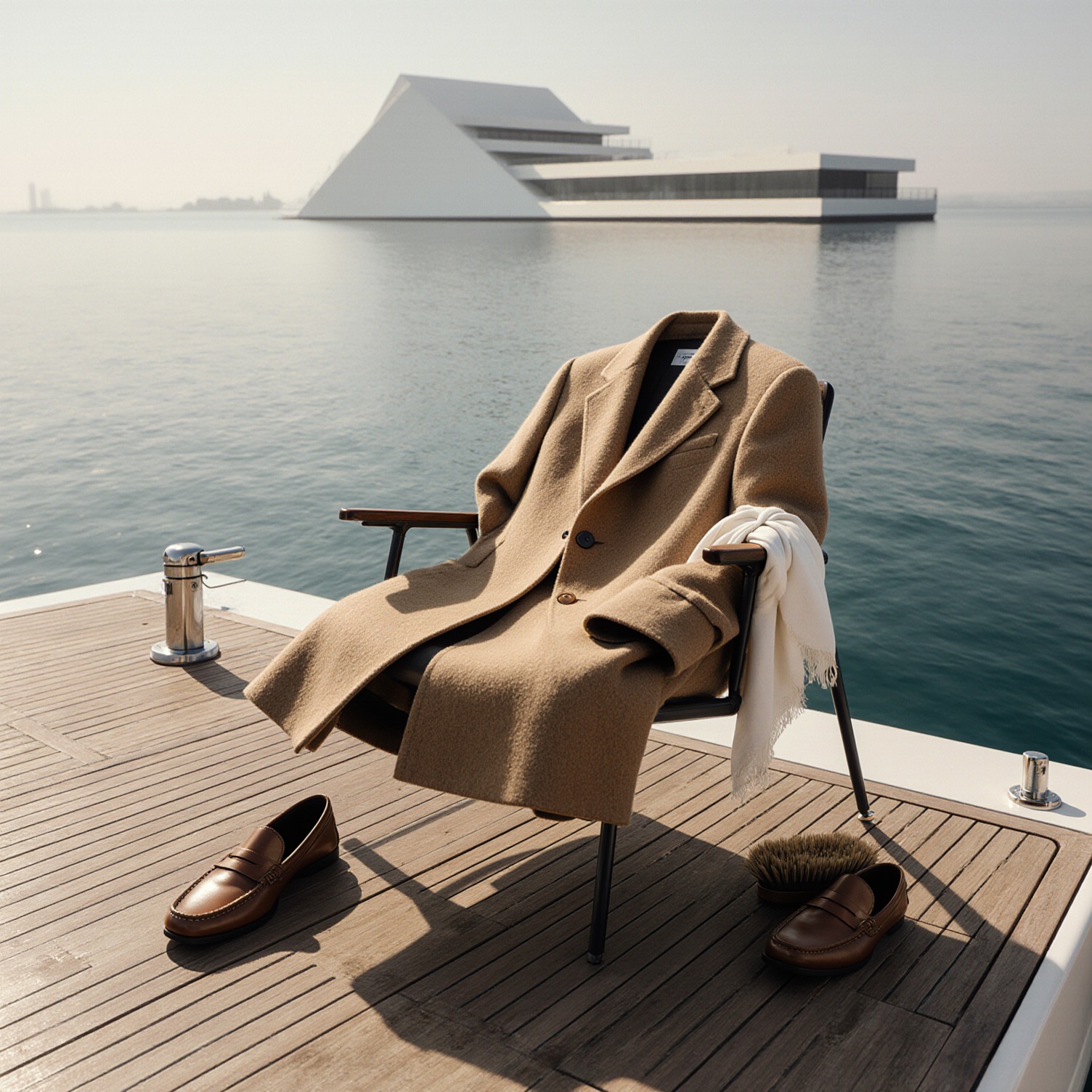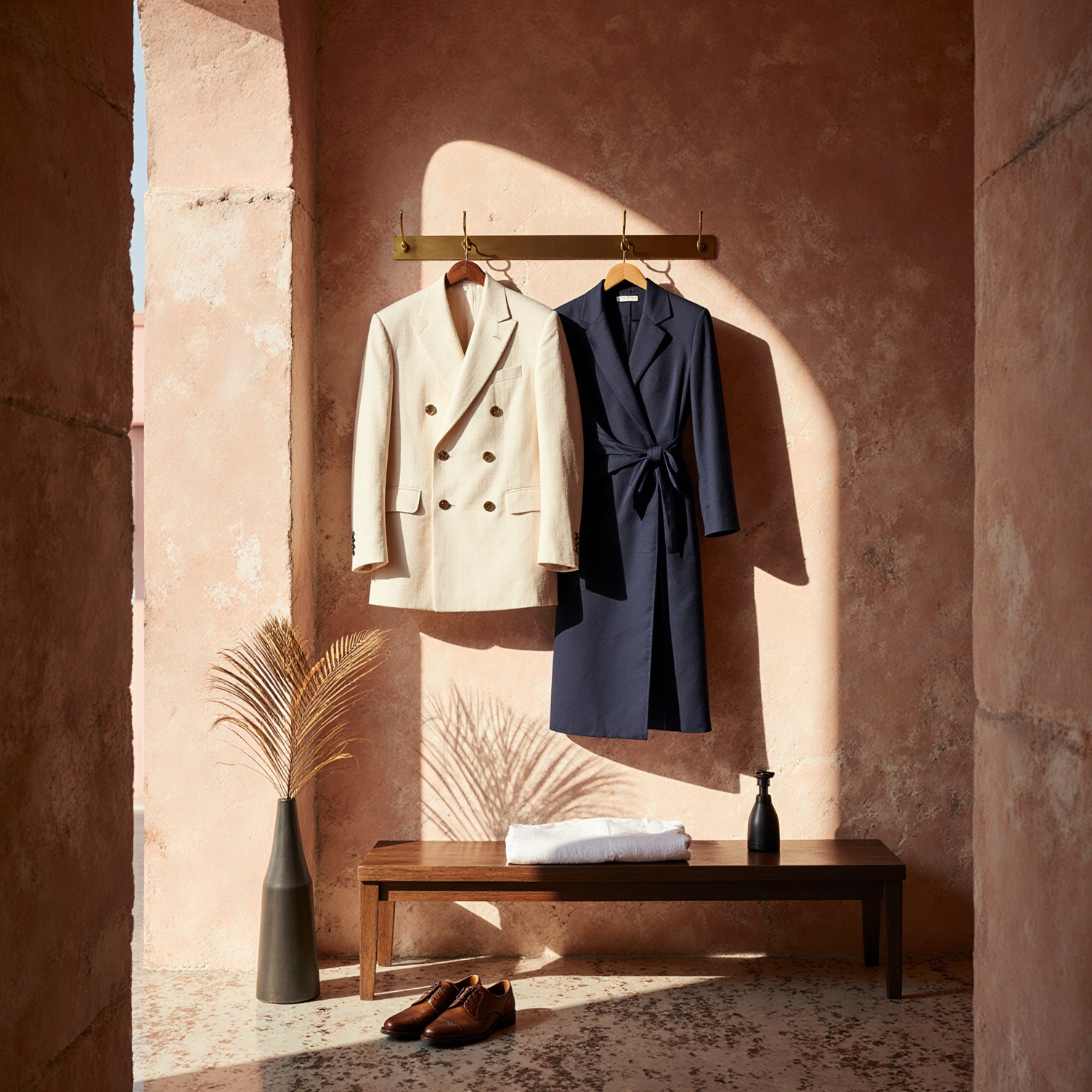


The Beautiful Thing Already Owned
Why the most sustainable garment in a luxury wardrobe is often the one preserved, cleaned well, and worn again.
Luxury has always liked the language of arrival. A new collection arrives. A new house opens. A new silhouette emerges. A new object becomes briefly irresistible. Fashion, by temperament, has long preferred the thrill of entrance to the quieter dignity of continuation. And yet, in the private lives of people who truly dress well, one finds a different story. The garments that matter most are not always the newest. More often, they are the ones that have stayed.
There is a particular pleasure in wearing something that has already proved itself. A jacket whose line still holds after years of dinners, travel, meetings, and evenings out. A silk dress that has survived changing moods, shifting seasons, and multiple chapters of one’s life without losing its ease. A cashmere knit that has softened into intimacy rather than collapsing into fatigue. A white dinner shirt that appears with the same calm authority each time it is called upon. These garments do not merely remain in the wardrobe. They deepen there. They become more than purchases. They become participants in a life.
This is why the modern conversation around sustainability, for all its preoccupation with innovation, often returns to a rather old-fashioned truth: one of the most responsible garments is often the one already hanging in the closet. Not because novelty has no place. It does, and always will. But because preservation is one of the most civilized forms of restraint. To extend the life of something beautiful is to resist a culture that mistakes replacement for sophistication. It is to understand that continuity, when chosen intelligently, can be a luxury in itself.
At Sudsies, this philosophy is not external to garment care. It is embedded in it. The Ecofriendliest garment care begins with a simple recognition that the life of a garment is shaped not only by how it was made, but by how it is maintained. A beautifully made piece can be slowly diminished by harsh chemistry, rough handling, unnecessary heat, impatient spotting, or finishing that values speed over fidelity. Just as surely, a garment can be protected, sustained, and made more enduring through methods that privilege gentleness, technical precision, and respect for the textile’s original character.
This is where the language of sustainability becomes personal. It is one thing to discuss circularity in abstract terms, and another to stand before a wardrobe and consider what actually remains wearable, desirable, and alive. The environmental case for preserving clothing is compelling enough. The emotional case is often even stronger. The cream linen suit bought for a particular spring in Palm Beach. The navy blazer that became inseparable from a working life. The black dress worn to a meaningful dinner and then, years later, to another event no less charged. The shawl packed for countless departures. The blouse that still belongs to a version of oneself one has not entirely left behind. These are not interchangeable with whatever comes next. Their continued existence in the wardrobe is part of what gives a wardrobe continuity at all.
Luxury, at its best, has always understood this. The finest garments are not conceived as disposable gestures. They are made with the assumption that they will be lived with. Construction, fabric, lining, finish, and cut all suggest a longer horizon. A beautifully tailored jacket expects to be worn repeatedly. A well-made coat expects weather, travel, storage, reappearance. A silk dress expects evenings, photographs, memory, and another invitation. Fine clothing anticipates time. What it requires in return is stewardship.
Stewardship can sound severe, though in the context of dress it is really a form of affection disciplined by knowledge. It means understanding that ownership carries obligations beyond acquisition. It means recognizing that the right way to care for a garment is not necessarily the fastest, harshest, or most generic way. It means asking not only whether something can be cleaned, but how it can be cleaned while remaining beautiful enough to deserve another life in the wardrobe.
Sudsies has built its place in South Florida precisely by understanding this distinction. Sudsies provides the Ecofriendliest garment care with the goal of helping garments remain themselves. That may sound simple until one considers how often clothing is returned altered in ways subtle enough to be overlooked by anyone except the wearer. Silk that no longer glides. Wool that has lost suppleness. Linen that appears freshly pressed yet somehow emptied of ease. A dark garment that seems clean but no longer rich in tone. A shirt that has become technically crisp and emotionally joyless. The tragedy of improper garment care is that it rarely announces itself dramatically. More often, it slowly makes a garment less lovable.
And once a garment becomes less lovable, it is worn less. It drifts to the rear of the closet. It misses dinners. It is left behind when packing. It begins to seem somehow “over,” though what may actually be over is only the quality of its maintenance. This is one reason preservation matters so deeply. Garments that are cared for properly remain in circulation. They continue to be chosen, which means they continue to matter. A better maintained wardrobe is often a more sustainable one not through ideology, but through repeated use.
This is particularly meaningful in South Florida, where wardrobes are both active and exposed. Clothing here lives under unusual pressures. Heat alters behavior. Humidity settles into fibers. Salt air has its own quiet erosions. Sunscreen, fragrance, makeup, perspiration, and the choreography of a socially engaged life all become part of what garments must absorb and survive. Resortwear is not merely ornamental. It works. Eveningwear must endure warmth without losing poise. White must remain luminous. Linen must remain elegant. Silk must remain fluid. In such a climate, garments do not survive on pedigree alone. They survive through informed care.
That care begins, in part, with what Sudsies declines to do. Sudsies avoids PERC and other harsh solvents associated with older models of traditional dry cleaning. For the guest, the immediate difference is often sensory. Garments return fresh, comfortable, and free from the chemical odor that many still associate with dry cleaning from another era. For the garment, the significance is cumulative. Repeated exposure to harsher processes can shape how a textile ages, how it feels, how it drapes, and how willingly it returns to the body. The gentler the intelligence applied to its care, the greater the chance that it will remain desirable to wear.
Yet the Ecofriendliest proposition at Sudsies is not merely about avoiding harshness. It is about choosing wisely. Not every garment should be handled in the same manner. Construction matters. Fiber matters. Embellishment matters. The sensitivity of color, the memory of shape, the vulnerability of trim, the hand of the fabric, all matter. Sudsies treats garment care as an exercise in reading before acting. The best process is the one that most faithfully preserves the garment’s identity.
This is particularly evident in couture and delicate designer pieces, where the line between cleaning and disruption can be exceedingly fine. A couture garment is not simply costly clothing. It is a composition of decisions: stitch, structure, movement, finish, ornament, and proportion held in fragile agreement. To care for such a piece requires more than technical ability. It requires restraint. Sudsies often approaches couture through steam-powered spotting and professional wet cleaning methods selected because they can clean effectively while remaining extraordinarily gentle. The objective is not to overpower the garment into apparent renewal. It is to preserve its inner coherence so that it returns to the wardrobe not diminished, but reawakened.
Still, one need not own couture to understand the significance of this. The same principle applies to a perfect cotton shirt, a navy blazer, a silk blouse, an evening dress, a cashmere sweater, or the beautifully cut trousers one reaches for with increasing frequency because they continue to deserve it. The most sophisticated wardrobes are not simply collections of special pieces. They are systems of continuity. They contain garments that have lasted because someone cared enough to make lasting possible.
This is where the idea of “the beautiful thing already owned” becomes especially appealing. It quietly overturns one of fashion’s most persistent assumptions, namely that desire must always attach itself to the next acquisition. In truth, some of the deepest satisfaction in dress comes from rewearing something one loves and finding that it still answers perfectly. It still fits the mood. It still works in the room. It still gives pleasure. There is something more elegant in this than in endless novelty. It suggests self-knowledge. It suggests confidence. It suggests that one has cultivated a wardrobe rather than merely accumulated one.
For South Florida’s HNWI households, this way of thinking often feels intuitive. The most elegant homes are not those filled indiscriminately, but those edited over time. The same is true of clothing. One buys with intention, lives with quality, and expects supporting services to uphold rather than erode that standard. Sudsies functions within this ecosystem not merely as a cleaner of garments, but as a custodian of continuity. Pickup and delivery simplify the mechanics, certainly, though the deeper value lies in what returns. Not just a cleaned piece, but a preserved one. Not just a refreshed item, but a garment still capable of participating fully in the life of its owner.
There is also a social intelligence to this kind of preservation. The garment one wears repeatedly and beautifully becomes part of one’s visual language. Others may not consciously remember the black dress or the cream jacket or the crisp blue shirt, though they remember the effect. Style, after all, is often built not on constant reinvention, but on the repeated appearance of things that suit the wearer deeply. To preserve garments well is therefore to preserve personal identity in visible form. The wardrobe becomes more coherent because its best pieces remain available to the self that chose them.
This is one reason the sustainable wardrobe is so rarely the most austere one. It is the most loved one. Garments endure when they are cared for well enough to remain lovable. The piece that comes back soft, true in color, and correct in line is worn again. The piece that smells clean rather than chemical reenters life immediately. The blouse that retains its fluidity, the jacket that keeps its architecture, the knit that remains supple, these are the garments that escape premature retirement. Sustainability, in this sense, is built through pleasure as much as principle.
The modern luxury consumer understands this increasingly well. Taste now includes questions that once belonged only to afterthought. How is this cared for? What touches the fabric? Does the process respect the garment? Will this still feel good in three years? Will it still deserve its place? Sudsies meets those questions with an answer that is both practical and cultural. The Ecofriendliest garment care is not an accessory to luxury. It is part of what luxury now requires. A garment that is expensive but badly maintained is not truly well owned. A wardrobe that is vast but unstable is not truly refined. The better life is the one in which beautiful clothes continue to be available for beautiful use.
That is perhaps the quiet radicalism of preservation. It is less visible than acquisition, less easily photographed than novelty, and far more revealing of character. It suggests patience. It suggests standards. It suggests that one values craft enough to protect it from careless decline. In a world obsessed with the new, the person who keeps beautiful things beautiful is making a statement of a different kind. Not a loud one, but a lasting one.
Sudsies has long understood that this is where garment care becomes something larger than maintenance. It becomes part of the ethics of ownership. To clean a garment well is to extend its life. To extend its life is to deepen its value. To deepen its value is to make the wardrobe more coherent, more pleasurable, and more responsible all at once. That is why the beautiful thing already owned may indeed be the most sustainable garment in the room. Not because it never ages, but because it has been given the chance to age gracefully.
And grace, in clothing as in life, is usually the result of how something has been treated.